When you think of Turkish cuisine, kebap is probably one of the first things that comes to mind. But here’s the thing, there isn’t just one kind of kebap. In Turkey, kebap is more like an entire category of dishes, each with its own unique flavor, texture, and style of serving. Some are spicy, others mild; some are grilled, while others might be baked or cooked over slow heat. And it’s not just about the meat either, how it’s served, the side dishes, and even the sauces can vary from region to region.
In this article, we’ll dive into the most popular kebap varieties you’re likely to come across in Turkey. We’ll break down the differences between them, highlight their distinct characteristics, and help you find the one that best suits your palate. Whether you’re a fan of rich, smoky flavors or prefer something lighter and more tender, there’s a kebap out there for everyone. So, if you’re ready to explore the world of Turkish kebap, stick with us, your taste buds are in for a treat!
1. Adana Kebap
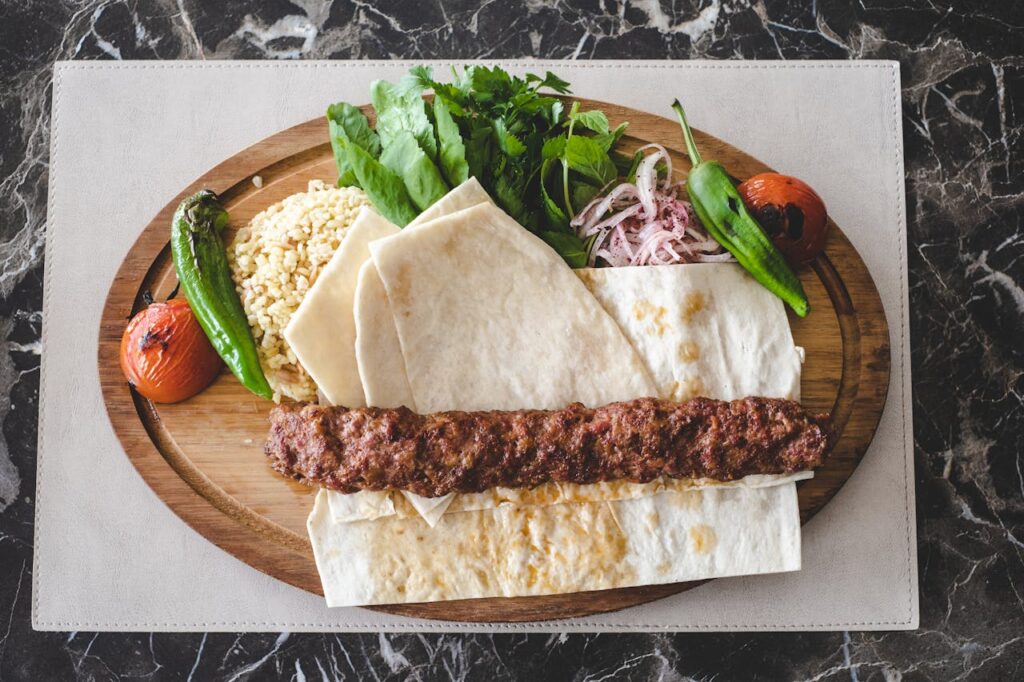
Adana kebap is more than just a dish; it’s a part of Turkish culinary heritage, deeply tied to the city of Adana in southern Turkey. This iconic kebap stands out from others with its bold flavors, rich texture, and meticulous preparation.
What makes Adana kebap truly unique is its simplicity combined with precision. The base is made from freshly ground lamb, typically mixed with a good amount of kuyruk yağı (lamb tail fat), which gives it a distinctive richness and juiciness. The mixture is seasoned with red pepper flakes and a blend of spices that vary slightly depending on the chef. The key, though, is that the meat is not processed in a machine; it’s finely chopped by hand using special knives called zırh, which helps keep the texture coarse and flavorful.
Once prepared, the kebap is molded by hand around a flat skewer and then grilled over open charcoal flames. This grilling process adds a delicious smoky flavor to the already flavorful meat. The final product is long, thin, and tender, served hot off the grill, usually accompanied by grilled vegetables, lavash, and a side of fresh herbs.
What sets Adana kebap apart from other kebap varieties is the intensity of its flavors and the use of lamb tail fat, which adds a deep, savory richness. Unlike şiş kebap, where pieces of meat are skewered, Adana kebap is made from minced meat. It’s also spicier than many other types of kebap, making it a standout choice for those who love a bit of heat in their meal.
For the best Adana kebap, there’s no better place than Adana itself. The city is home to countless kebap restaurants where the dish is taken very seriously, with recipes passed down through generations. Eating it in Adana feels like a rite of passage; it’s not just about the food, but the entire experience. The aromas of grilled meat waft through the air, the atmosphere is lively, and the pride the locals take in their kebap is palpable. That said, some restaurants outside of Adana have managed to replicate the authentic experience, so you don’t have to travel all the way there to enjoy it.
When you bite into Adana kebap, you get an immediate burst of flavors; the heat from the red pepper, the richness of the lamb, and that unmistakable smokiness from the grill. It’s the kind of dish that sticks with you, not just because of the flavor, but because of the experience of eating something so deeply rooted in tradition. Whether you’re sitting at a bustling kebap restaurant in Adana or finding a local spot elsewhere, Adana kebap is a must-try for anyone looking to experience the depth and complexity of Turkish kebap culture.
In Turkey, kebap is more than just food; it’s a way of life, and Adana kebap holds a special place within that culture, often seen as one of the finest expressions of this culinary art.
2. Urfa kebap
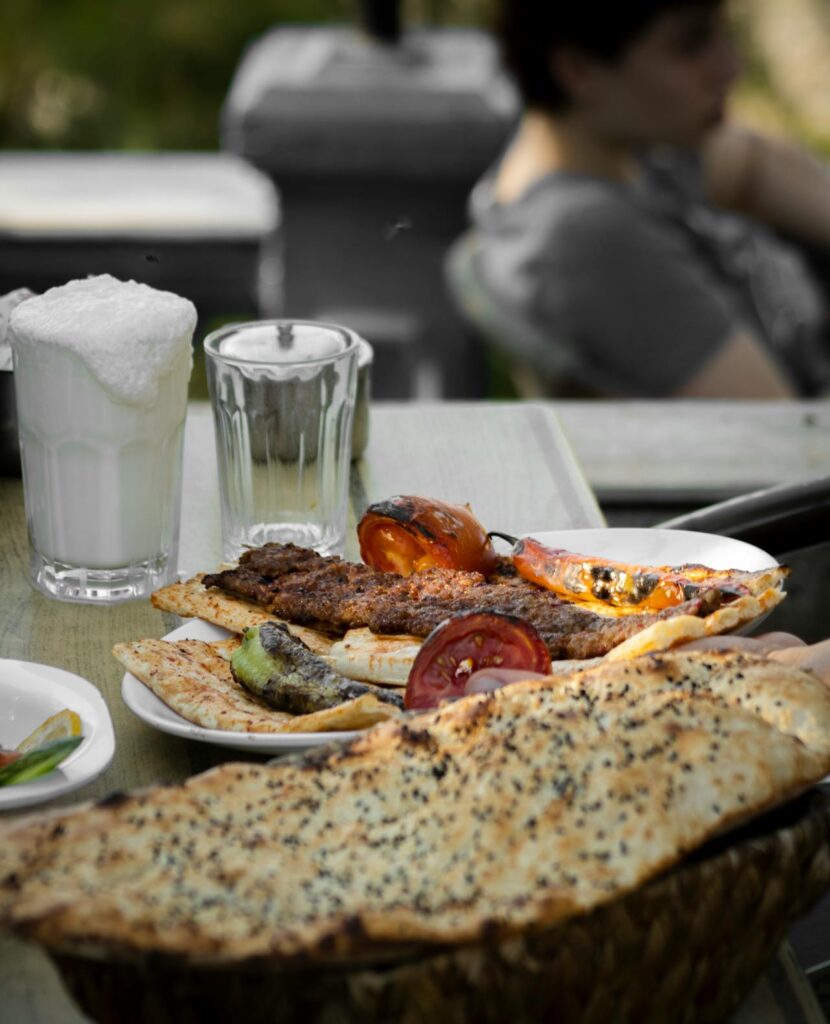
When it comes to Urfa kebap, you’re stepping into the heart of Turkey’s rich kebab culture. Urfa, known as one of Turkey’s gastronomic capitals, offers a variety of dishes that reflect the city’s deep culinary traditions. Among them, Urfa kebap stands out for its unique flavor and preparation. At first glance, you might think it’s similar to Adana kebap, but once you take a bite, you’ll realize how distinct it is.
The base ingredients are quite simple: lamb meat, tail fat, and spices. But unlike Adana kebap, Urfa kebap is mild, meaning it doesn’t have the same level of heat. This makes it an ideal choice for those who prefer a gentler, less spicy option. The meat is still packed with flavor thanks to the fresh lamb and aromatic spices like cumin and sumac, but the absence of hot chili allows the richness of the lamb to truly shine.
Urfa kebap is often considered the more approachable sibling of Adana kebap, which can be quite spicy. If you’re not a fan of heat but still want to experience the authentic taste of Turkish kebabs, Urfa kebap is your go-to choice. The key to its tenderness lies in the addition of tail fat, which melts as it grills, infusing the meat with moisture and flavor.
To truly experience Urfa kebap, you need to visit its home city, Şanlıurfa, where this kebap is an essential part of the local food scene. The best places to try it are traditional kebap houses, often located in the older parts of the city where the recipe has been passed down through generations. You’ll know you’re in the right place when you see the grills going, the smell of freshly cooked meat filling the air, and the sounds of skewers sizzling over the open flame.
Eating Urfa kebap is not just about the flavor, it’s about the whole experience. Served with flatbread, roasted vegetables, and fresh herbs, the meal is designed to be shared and savored slowly. You feel a connection to the region’s history and people, as Urfa kebap is a dish that’s been enjoyed for centuries, deeply embedded in the city’s cultural fabric.
And then, there’s the kebap culture itself. In Turkey, kebaps are more than just food; they’re a way of life. They bring people together, whether it’s at a family gathering or a night out with friends. Sitting down to a plate of Urfa kebap, you get to experience this tradition firsthand. The mildness of the Urfa kebap, combined with the richness of the lamb, makes it comforting yet sophisticated. Every bite tells a story of the region’s history, the care that goes into preparing the dish, and the passion that Turkish people have for their food.
So, if you ever find yourself in Şanlıurfa, trying an Urfa kebap is an absolute must. It’s a culinary experience that goes beyond just taste, it’s a journey into the heart of Turkey’s kebap culture.
3. Şiş kebap
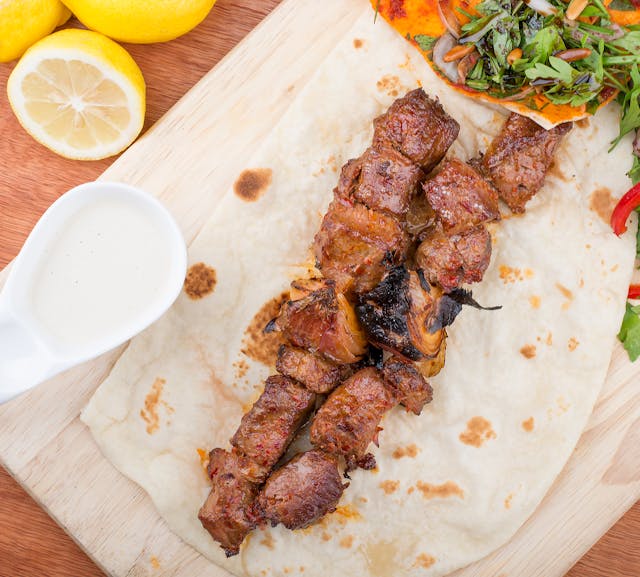
Şiş kebap is one of those classic Turkish dishes that you simply must try when you’re in Turkey. It’s simple yet incredibly flavorful, and the magic lies in its preparation. Unlike other kebabs like döner or cağ kebap, şiş kebap is made with chunks of marinated meat (usually lamb, beef, or chicken) that are skewered and grilled over an open flame.
What makes it special? First, the marinade. The meat is typically soaked in a mixture of olive oil, yogurt, garlic, and spices like cumin and paprika, which tenderizes it and packs it with flavor. After marinating, the pieces are skewered (the “şiş” refers to the skewer), along with vegetables like tomatoes, peppers, or onions, and then grilled to perfection over hot coals.
The grilling process itself is what sets şiş kebap apart. The open flame gives the meat a slightly charred, smoky exterior, while keeping it juicy and tender inside. That balance between the crispy outside and the soft, flavorful inside is what makes şiş kebap so irresistible. Each bite has a smoky, spiced flavor that’s enhanced by the accompaniments, like grilled vegetables and fresh lavash or pita bread.
When you sit down to enjoy şiş kebap, especially in a local restaurant or a traditional Turkish ocakbaşı (open grill restaurant), there’s a certain simplicity to the experience. The atmosphere is laid-back, often with the smell of grilling meat filling the air. As you take that first bite, there’s an instant burst of flavors&spices, herbs, and a subtle char from the grill. It’s comforting and satisfying, yet not overly heavy.
The best places to try şiş kebap? While you can find it all over Turkey, it’s especially popular in cities like Adana and Gaziantep, where locals have perfected the art of kebab, making. Some say the real secret is in the local quality of the meat and the skill of the grill master. Wherever you are, though, sitting down to a plate of freshly grilled şiş kebap is bound to leave you feeling deeply satisfied and connected to Turkey’s rich culinary tradition.
4. Döner kebap
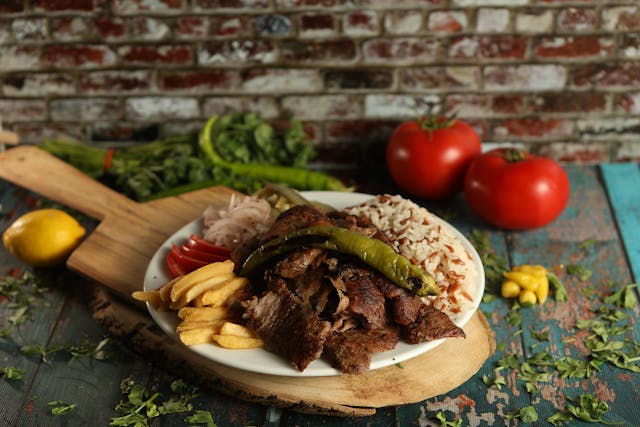
When you talk about döner kebap, you’re really talking about one of Turkey’s most famous and iconic dishes. Imagine walking down the streets of Istanbul or Ankara, the smell of sizzling meat filling the air; it’s hard not to get hungry. Döner kebap is made by stacking marinated slices of lamb, beef, or chicken on a large metal skewer, which is placed vertically on a rotisserie. The meat slowly turns in front of a flame, cooking evenly as it rotates. This method gives it that perfect balance of crispy on the outside and juicy on the inside. When it’s ready, the cook expertly shaves off thin slices, making every bite tender and flavorful.
What makes döner kebap stand out is the marinade. Usually, the meat is soaked in a mixture of olive oil, yogurt, garlic, and spices like cumin and paprika, which makes it extra tender. Depending on where you are in Turkey, the seasoning might be more intense, or you might find a milder, more natural flavor. In some regions, the meat is spicier, while in others, it’s more about letting the natural taste of the lamb or beef shine through.
One of the best things about döner is its versatility. You can enjoy it in so many ways. Want something hearty? Try it on a plate with rice, grilled vegetables, and salad. Or if you’re on the go, there’s nothing like grabbing a döner dürüm, meat wrapped in a soft flatbread or the classic ekmek arası, where the meat is stuffed into fresh bread.
Now, if you really want to experience döner kebap at its finest, the key is to find a place that specializes in it. Some of these shops have been perfecting their recipe for decades, and the result is pure magic. The meat is sliced just right, the marinades are a well-guarded secret, and the whole process is done with incredible skill.
It’s not just in Turkey where döner has found a home; this dish has gone global, representing Turkish cuisine in cities around the world. But there’s nothing like trying it in its homeland, where every bite brings with it a taste of tradition and culinary expertise.
5. Cağ Kebap
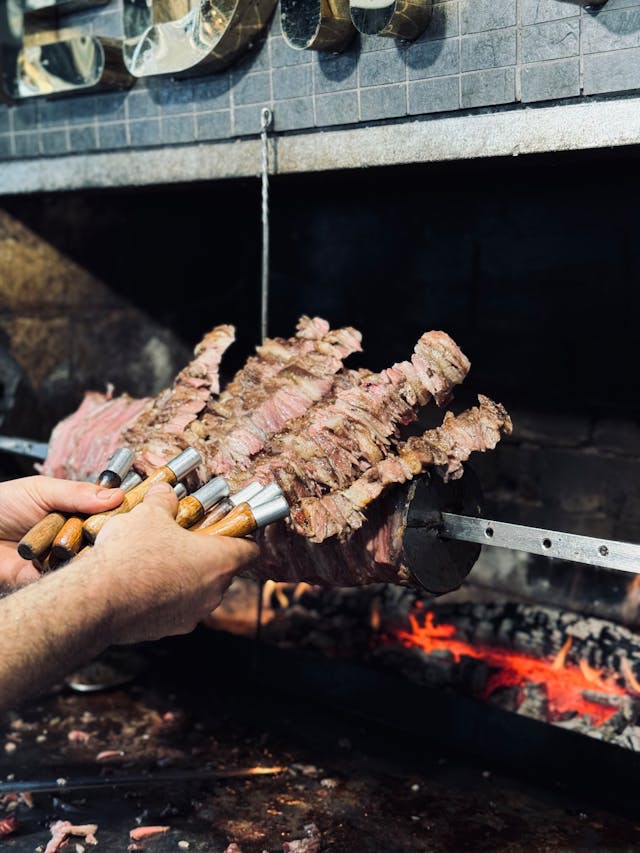
When you think of Erzurum, it’s almost impossible not to picture cağ kebabı, one of the region’s most iconic dishes. While it might look a bit like döner kebap at first glance, there are some key differences that set it apart. First off, cağ kebabı is made exclusively from small livestock like lamb, goat, or kid, while döner kebap can be made from both large and small animals, including beef.
The preparation is also unique. The marinated meat is laid horizontally and slow-cooked over a wood fire, giving it a distinct smoky flavor. Once the outer layer is cooked to perfection, it’s sliced onto skewers, called “cağ” and then, in true cağ kebabı style, the skewers are returned to the fire for a final sear. This process ensures that the meat remains juicy and full of flavor, without drying out.
For the locals, there’s also a special variation known as tatari, which is served slightly less cooked than the typical cağ kebabı. After slicing, the meat isn’t returned to the fire for further cooking, which leaves it more tender and rare. It’s a must-try for meat lovers and food connoisseurs who want to experience something a bit more adventurous.
What really sets cağ kebabı apart from döner isn’t just the cooking style or the type of meat, but the whole ritual of preparation and service. The careful way in which the meat is handled; from marination to the final grilling over an open flame, requires real skill. The tenderness and smoky flavor of the meat, combined with its rustic preparation, make cağ kebabı a dish that food enthusiasts won’t want to miss when visiting Erzurum.
In short, whether you’re enjoying the perfectly cooked version or trying the less-cooked tatari variation, cağ kebabı is an experience in itself, deeply rooted in Erzurum’s culinary traditions and a must for anyone visiting the region.
6. İskender Kebap
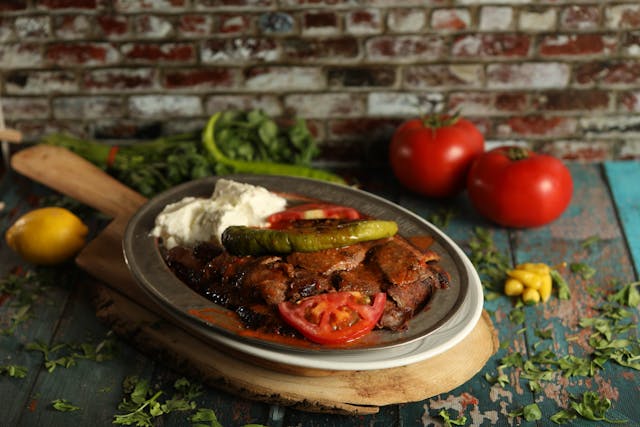
When it comes to İskender kebap, it’s one of those dishes that instantly grabs your attention not just for the taste, but for the whole experience. Unlike other kebabs or döner, İskender is all about layers of flavor and texture coming together in the most indulgent way.
It starts with thinly sliced lamb or beef, roasted on a vertical spit, similar to döner. But what sets İskender apart is how it’s served. The meat is placed on a bed of soft, fluffy pita bread that soaks up all the delicious juices and sauces. Then, it’s generously covered with a rich, tangy tomato sauce and topped with hot, melted butter; poured right before serving, so it sizzles when it hits the plate. You can actually hear it! And if that wasn’t enough, it’s always served with a side of cool, thick yogurt, which balances out the richness perfectly.
One of the key differences between İskender and other kebabs is the combination of flavors. The butter adds an extra layer of indulgence, while the tomato sauce gives it a fresh, tangy kick. The pita bread, drenched in all those flavors, becomes soft but still holds up, making each bite something special. It’s not just grilled meat on its own everything works together to create this hearty, satisfying meal.
What makes İskender kebap truly memorable is the attention to detail. From the way the meat is cooked to the precise moment the butter is added, everything is done with a focus on bringing out the best flavors. And if you’re ever in Bursa, where İskender kebap originated, you’ll notice that the best places have been perfecting this dish for generations. It’s not just food,it’s tradition, and you can taste the care and love in every bite.
7. Testi Kebap
When I first tried Testi Kebabı, I realized it’s not just about the taste, it’s an entire culinary experience. Unlike other kebabs or even döner, Testi Kebabı is cooked inside a clay pot (testi) that’s sealed with dough. The real excitement comes when the chef cracks open the pot right in front of you, releasing a wave of rich aromas.
What makes it stand out is the slow-cooking method. The meat, usually lamb or beef, is cooked with vegetables like tomatoes, onions, and peppers inside the sealed clay pot. As it slowly cooks over a fire, all those flavors meld together, creating this incredibly tender, flavorful stew. The sealed pot keeps all the juices and steam inside, so the meat becomes super tender, almost melting in your mouth when you finally get to taste it.
Unlike other kebabs, where the meat is grilled, Testi Kebabı is more like a hearty stew. The slow cooking in the sealed pot really locks in the moisture and flavors, giving it a unique richness. You don’t get the charred smokiness of a döner kebap or a cağ kebap, but instead, you get this beautifully seasoned, melt-in-your-mouth meat that has been stewing in its own juices.
The fun part is definitely the presentation. Watching the chef crack the clay pot open with a flourish is like dinner and a show combined. Once it’s open, they pour out the steaming kebab onto your plate, and the flavors just hit you immediately. It’s rustic, comforting, and absolutely packed with flavor, a must-try if you ever visit Cappadocia or central Turkey, where this dish is a local specialty.
8. Çöp şiş
Çöp Şiş is one of those hidden gems of Turkish cuisine that doesn’t always get the attention it deserves, but once you try it, you’ll understand why it’s so beloved by locals. Unlike larger, more familiar kebabs like döner or şiş kebap, çöp şiş is all about bite-sized pieces of marinated meat skewered on thin wooden sticks (which is where the name “çöp,” meaning “stick,” comes from).
The secret to its deliciousness lies in the simplicity and the cooking method. The meat, typically lamb or chicken, is marinated in a mixture of olive oil, garlic, oregano, and a few local spices. What makes çöp şiş stand out is that the meat is often cut into smaller, more tender pieces, allowing it to cook quickly over a hot grill without losing any of its juicy flavor. It’s grilled over high heat, so you get that perfect char on the outside while the inside stays tender and moist.
Another thing that sets çöp şiş apart from other kebabs is the presentation. It’s usually served with a side of fresh, warm bread and a variety of mezes,small dishes like grilled vegetables, yogurt, or fresh salads. The skewers are meant to be eaten casually, almost like Turkish street food, which adds to its charm. You just grab a skewer, pull the meat off onto your bread, and enjoy it with a bit of salad or sauce.
What makes çöp şiş so special is the balance of textures and flavors. The charred, smoky edges of the meat, the soft and chewy bread, the cool and refreshing mezes; it all comes together in a way that’s so simple, yet incredibly satisfying. It’s a dish that doesn’t try too hard to impress, but always leaves a lasting impression.
9. Patlıcan Kebap
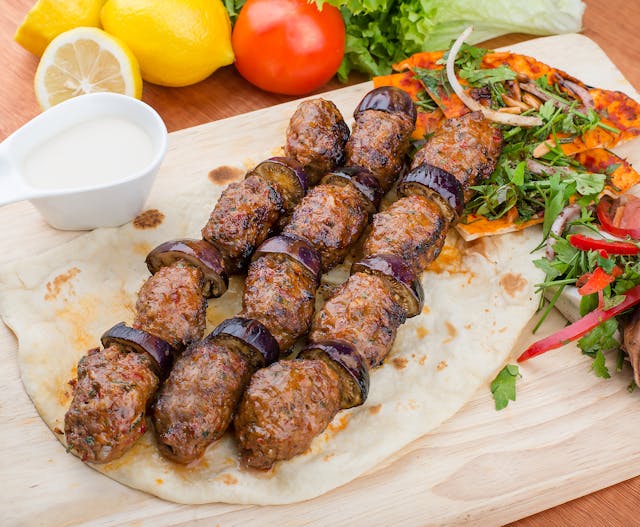
Patlıcan kebabı is one of those dishes that, once you try it, you’ll wonder how something so simple can be so incredibly flavorful. The star of the dish is, of course, the eggplant (patlıcan in Turkish), which is paired with juicy, well seasoned ground lamb or beef. What makes this kebab stand out from others is the beautiful layering of the eggplant and meat, almost like a kebab on skewers but with alternating pieces of smoky, tender eggplant and rich, spiced meat.
The meat mixture usually includes basic but flavorful ingredients like onion, garlic, and a blend of spices; often paprika, cumin, and black pepper,giving it a robust taste. The eggplant is either grilled or roasted over an open flame, which adds a subtle char and smokiness that pairs perfectly with the seasoned meat.
What makes patlıcan kebabı truly special is the way the eggplant soaks up all the flavors from the meat as they cook together, making each bite packed with a mix of smokiness, juiciness, and spice. It’s a perfect balance of textures too: the softness of the eggplant, the slight chew of the meat, and the burst of flavor from the spices.
To serve, it’s often accompanied by fresh vegetables like tomatoes and peppers, and sometimes even a bit of rice or flatbread. The simplicity of the ingredients and the way they come together is what makes patlıcan kebabı such a beloved dish in Turkey. It’s proof that you don’t need a lot of fancy ingredients to make something truly delicious; just quality produce, good seasoning, and a bit of time over the grill!
10. Beyti Kebap
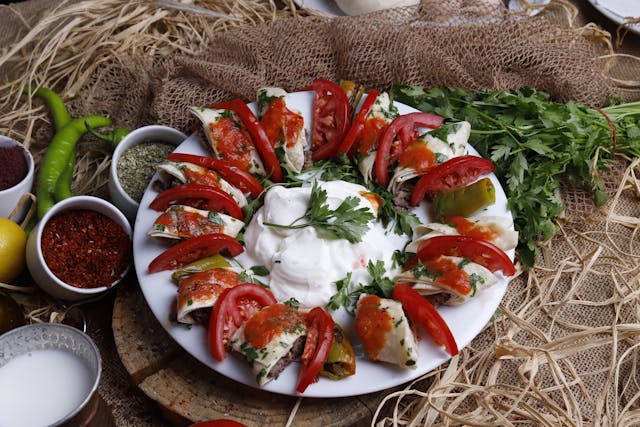
When it comes to Beyti kebap, you’re in for something truly special. It’s a dish that stands out from the usual kebab varieties with its unique preparation and presentation. Imagine succulent, perfectly spiced ground lamb or beef wrapped in thin layers of lavash (flatbread) and then grilled to perfection. It’s the combination of flavors and textures that makes this dish unforgettable; the tender meat, the slightly crispy lavash, and the final drizzle of tomato sauce and melted butter, all served with a side of creamy yogurt.
One thing that sets Beyti kebap apart is the charcoal grilling. The meat is carefully seasoned with spices like paprika, cumin, and black pepper, which bring out the rich flavors of the lamb or beef. After grilling, the meat is wrapped in the lavash and cut into bite-sized pieces, making it easy to eat and share. The final touches, rich tomato sauce and melted butter, are poured over the top just before serving, adding a burst of flavor that elevates the dish.
What really makes Beyti kebap stand out, though, is the balance of flavors. The combination of the juicy meat, the warm lavash, the tangy tomato sauce, and the cool yogurt creates a perfect harmony in every bite. It’s rich and hearty but also light enough to leave you wanting more.
For the best Beyti kebap experience, I’d recommend trying it at its place of origin Istanbul, specifically at Beyti Restaurant, where the dish was first created. The feeling of eating Beyti kebap in the restaurant that gave it its name is something else. You get a sense of tradition, care, and craftsmanship that’s been passed down through generations.
When you take that first bite, there’s this moment of pure satisfaction as the flavors melt together, and you realize you’re tasting a piece of history. It’s the kind of dish that’s not just about the food but the whole experience; being in Turkey, soaking in the atmosphere, and enjoying a meal that’s been perfected over time.
